ExamGraph, for NEET UG. Computer-based from 2027.
The exam moved to a screen. This is the screen.
ExamGraph is a NEET preparation system built around one record of every answer a student gives: full mock papers in the NTA question palette, chapter tests, past papers, and targeting driven by measured results.
Start free at examgraph.app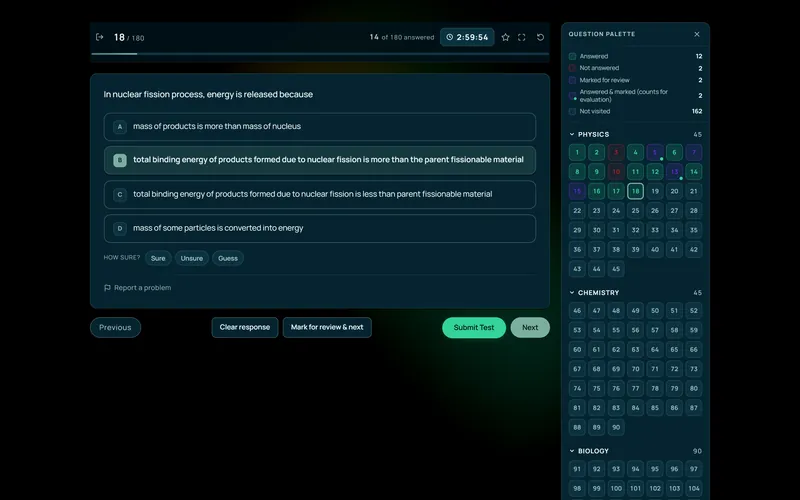
What the NTA announced
The same screen, the same squares.
On 15 May 2026 the Union Education Minister, Dharmendra Pradhan, announced that NEET-UG would move to a computer-based test. On 14 September 2026 the NTA’s Director General, Abhishek Singh, confirmed it for the 2027 cycle. The change follows the 2026 paper leak.
- What changes
- The medium. A screen, an on-screen timer, a question palette, and mark-for-review instead of an OMR sheet.
- What does not
- The syllabus. The same NCERT Class 11 and Class 12 Physics, Chemistry and Biology.
- What it means
- Every candidate sitting NEET 2027 has an interface to learn, on top of the subject.
This is not a reason to panic. It is a change of medium, not of content: the chapters a student opened this morning are the chapters they will be examined on. The only genuinely new thing is the screen, and a screen is the one part of an exam you can practise until it is boring.
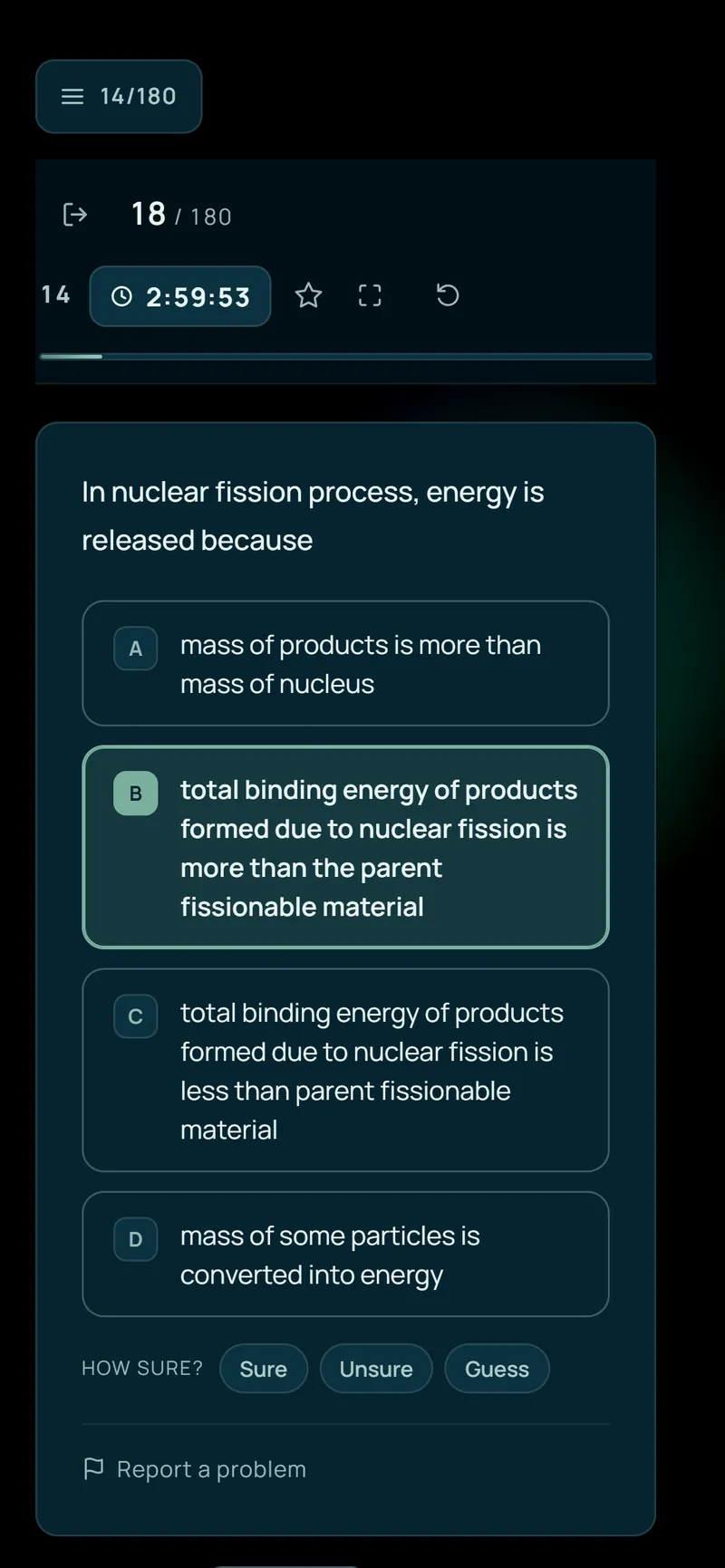
ExamGraph’s mock papers have run in an NTA-style question palette since before the announcement, because it was the right way to build a mock paper either way. It is not a mock-up drawn for this page. It is the component the app runs.
The interface
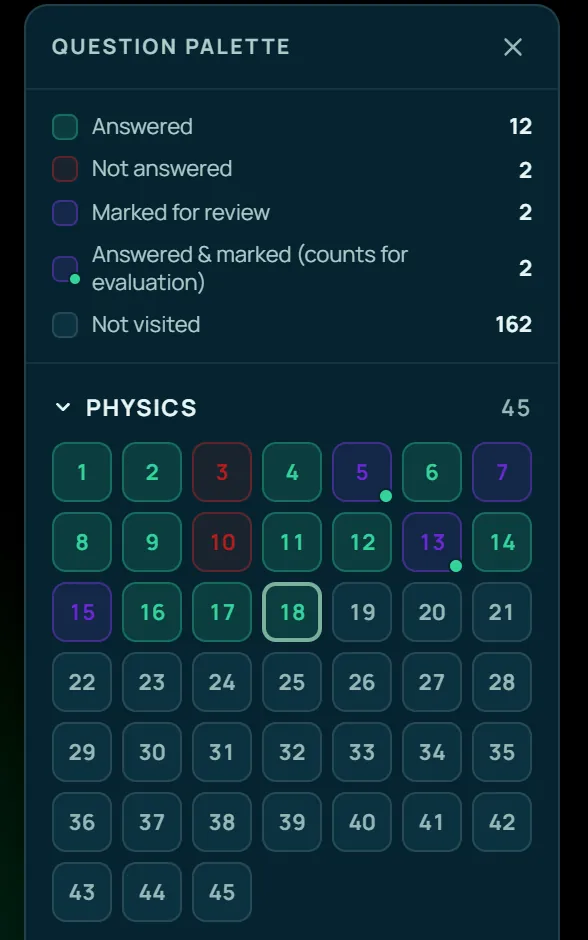
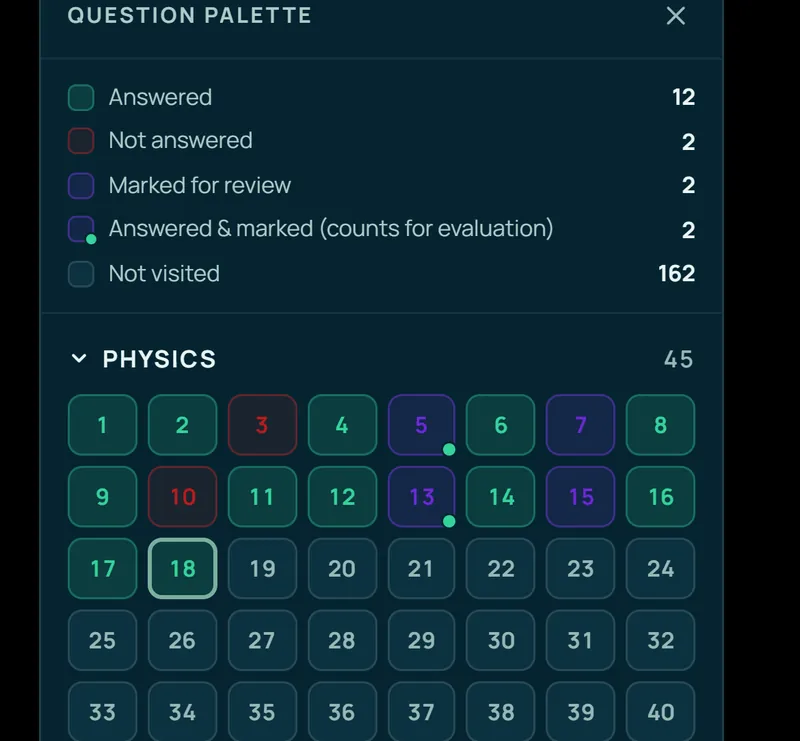
Five states, because NTA distinguishes five.
The palette on the right of a computer-based test is the thing you learn to read under pressure: how many are green, how many are still red with eleven minutes left. ExamGraph builds the same palette over the same paper — 180 questions, 180 minutes, grouped by subject in the order the paper puts them — so the rehearsal is the same shape as the thing it rehearses.
- 01
Every question starts grey. Nothing visited, nothing decided.
- 02
Open one and leave it blank, it turns red. The palette remembers.
- 03
Answer it and it turns green. Answered outranks seen, always.
- 04
Not sure? Mark it purple and move. You will come back.
- 05
Answered and marked is its own state — purple square, green dot, still counted.
Green answered · red seen · purple marked · grey untouched
A question you marked and also answered still counts for evaluation, so it gets its own square rather than being hidden inside “marked”.
Sit one full paper and you will never have to think about the legend again.
The hinge
Every answer lands in one place.
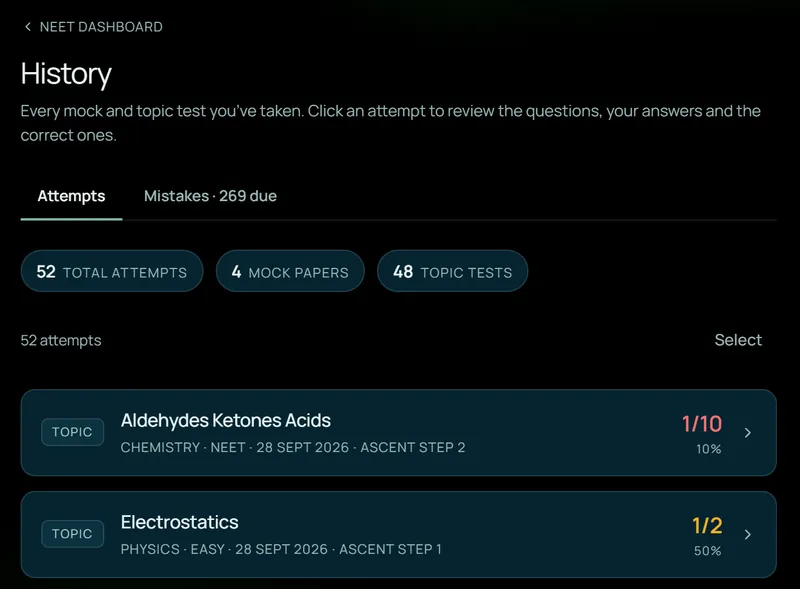
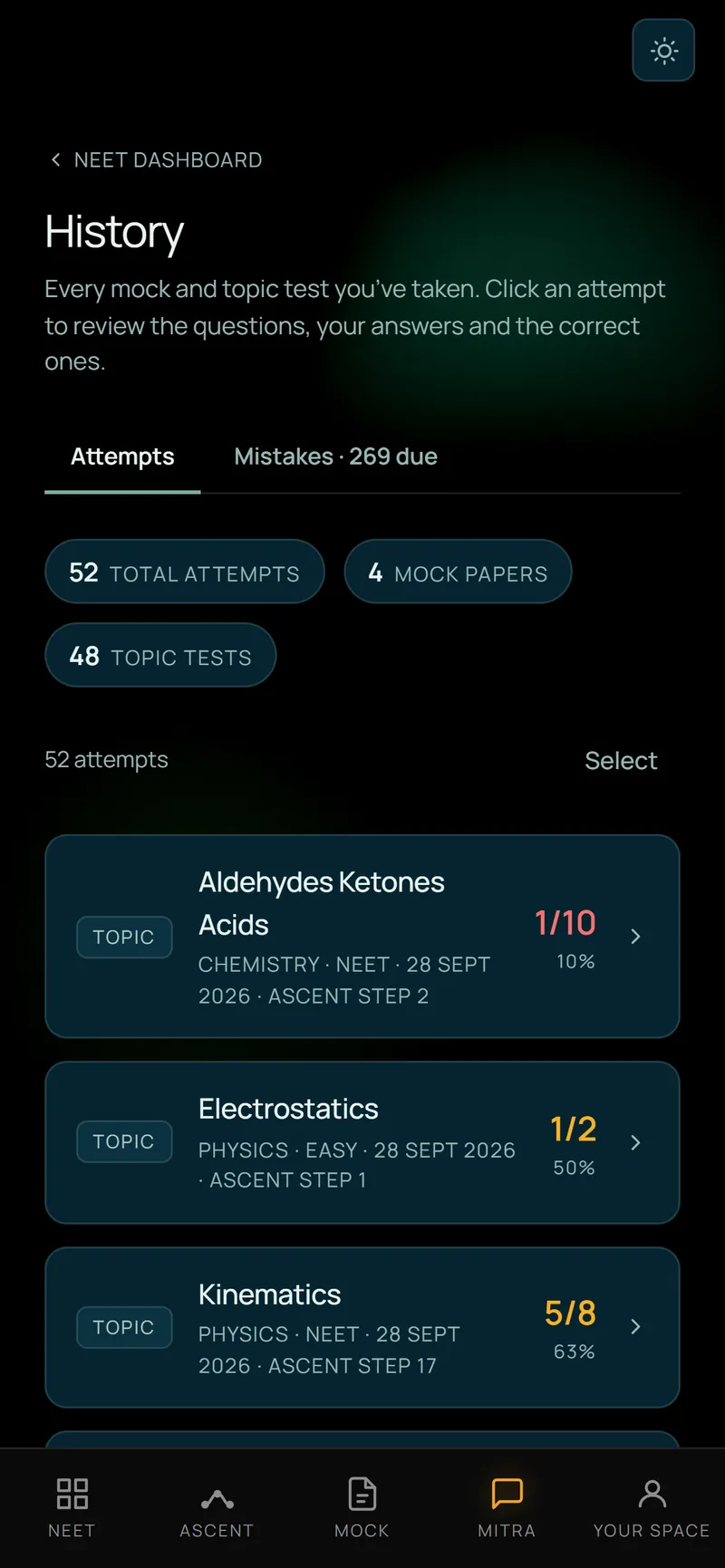
A topic test, the daily ten, a full mock, a paper you built yourself, a past paper — they all write into the same two rows: one line in your attempt history, one updated score for that chapter. There is no separate “practice mode” that does not count.
Marked on the server, not in your browser
Your device sends which option you picked. The correct answer is read back from the question bank and compared there, so a score is a fact rather than something the page decided about itself.
Ten minutes of streak practice counts like a test
The daily ten and a deliberate topic test go through exactly the same grading path, so the habit you keep in the morning moves the same chapter score a serious sitting moves.
You are not shown the same question twice by accident
The server keeps a list of what it has already served you and prefers questions you have not seen. Repetition, when it happens, is because you asked for it.
This is the difference between a question bank and an instrument. A bank hands you questions. This keeps the result.
What comes next
The order is decided by your own scores.
When ExamGraph suggests a chapter, it is not walking the syllabus in order and it is not guessing. It reads your per-chapter score and the date you last touched each one, sorts them worst first, and tells you which bucket each one came out of.
- Weak
- Best score under 40%. These come first, worst first.
- Flagged
- You said this one was a problem and have never tested it.
- Middling
- Best score under 70%. Good enough to feel safe, not enough to be.
- Stale
- Above 70%, but untouched for three weeks or more.
- Untried
- Never attempted. Last, because a guess is not a gap.
What you say about yourself is only the seed
At signup you can flag the chapters you think are weak. Those lead only until you have actually sat something. A measured 34% is a fact, and the fact wins.
It puts the marks first
Twenty of the live chapters produce about 44% of the paper. Recommendations, the daily set and the tutor all know the weight of every chapter.
MITRA, part of Pro
A tutor that opens your results before it opens its mouth.
Study advice is generic because it has no idea what you got wrong. MITRA reads the attempt history first: what you scored, what you keep missing, what you have never opened. Only then does it answer.
One companion, four voices. Pick the one you would actually listen to.
- Plain
- Hinglish
- Casual
- Nerdy
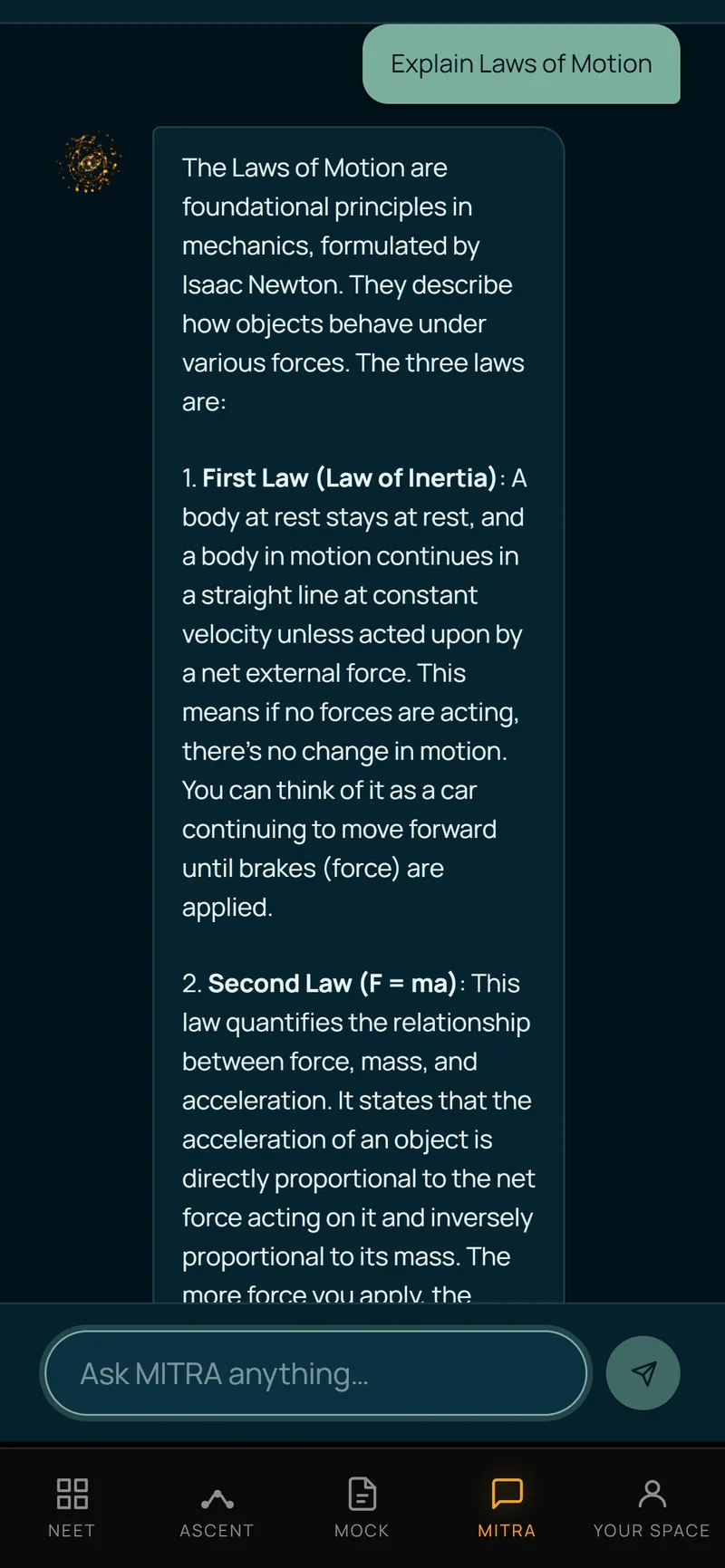
It starts from your marks, not the syllabus order
The weakest chapter carrying the most marks comes first, and it says out loud why it picked that one.
It quotes the NCERT line, with the page number
When the gap is the text itself, it searches the actual NCERT prose and reads the passage back with its citation. If it cannot find the passage, it says which chapter and pages to open instead of bluffing.
It ends in the test it just argued for
Every answer finishes with a button that builds the practice set, and when that set is done MITRA comes back with a debrief of what moved.
MITRA is part of Pro. It is not included on a free account, and the free tier says so plainly.
The loop
What happens after a red square.
You pick the wrong option
The paper marks it and moves on. Nothing interrupts the sitting.
You ask for the working
A step-by-step explanation is written for that exact question and the exact option you chose — not a stored solution.
The chapter score moves
That question belonged to a chapter. The chapter’s number changes, whether the question came from a mock, the daily ten or a test you sat on purpose.
The next set already knows
Fall under 40% and the chapter moves to the front of what you are offered next. You do not have to remember to come back to it.
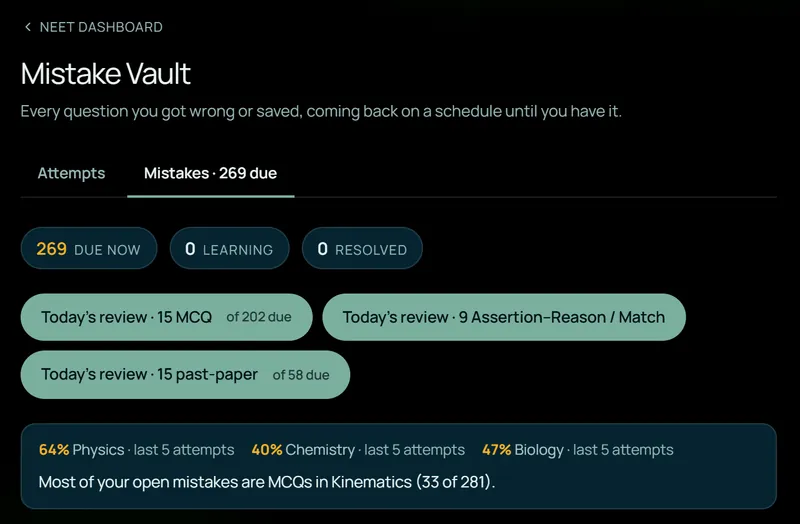
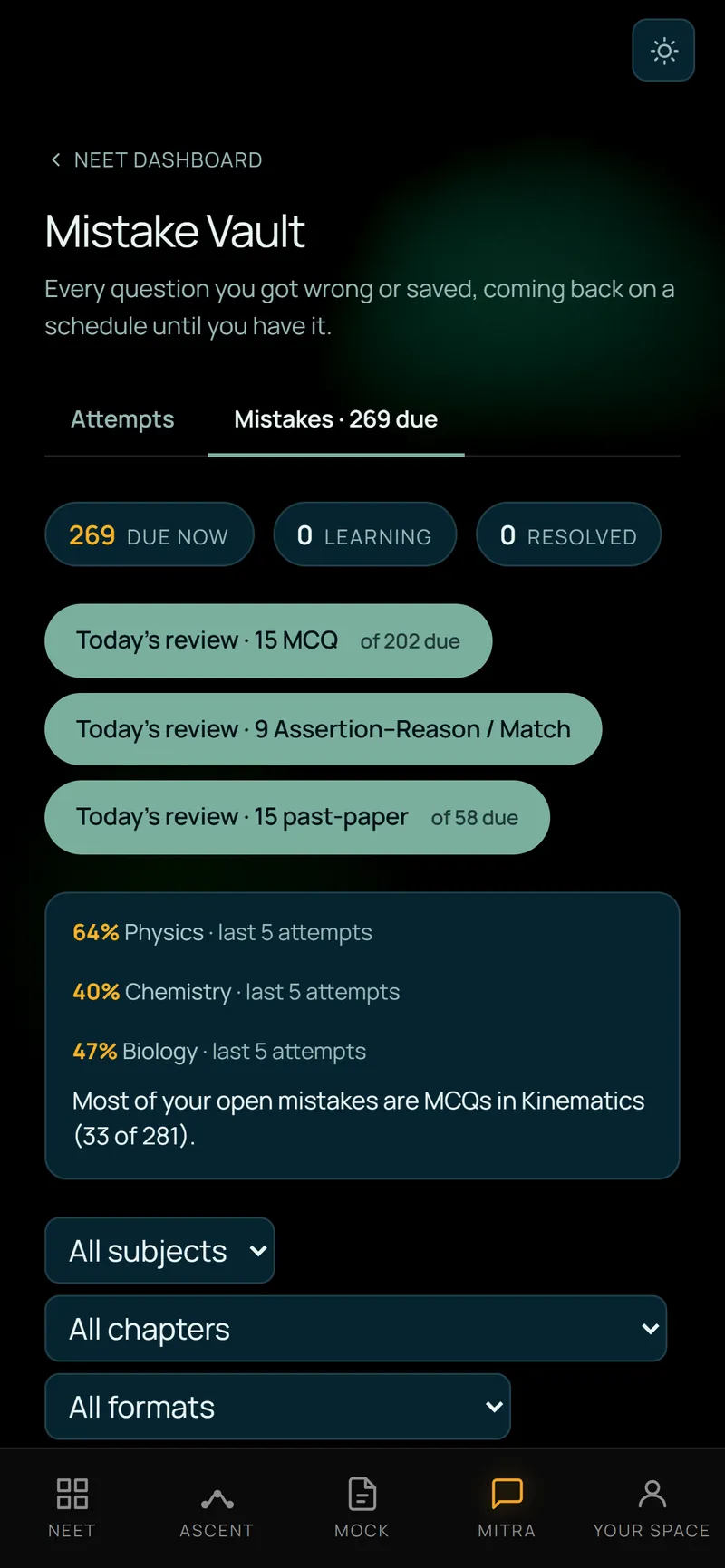
The Mistake Vault
Every wrong answer comes back on a schedule — 1, 3, 7, 16 and 35 days — with the ones you were sure about first. A lapse restarts the clock; two clean passes a week apart retire it. The answer stays hidden until you ask for it.
And if the question itself is wrong, report it. It is pulled out of the paper and replaced, and it stops being served while it is reviewed.
Ascent
Seventy-two chapters as one line to walk.
Ascent is the live syllabus as a path: one chapter after another in the order the exam weights them, rotating Physics, Chemistry and Biology, grouped into Camps. There is one current step, and it is always obvious.
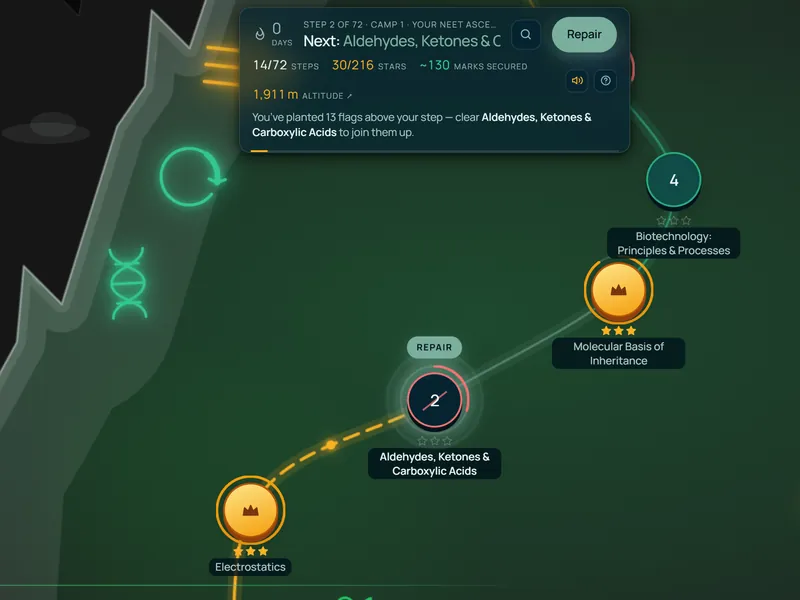
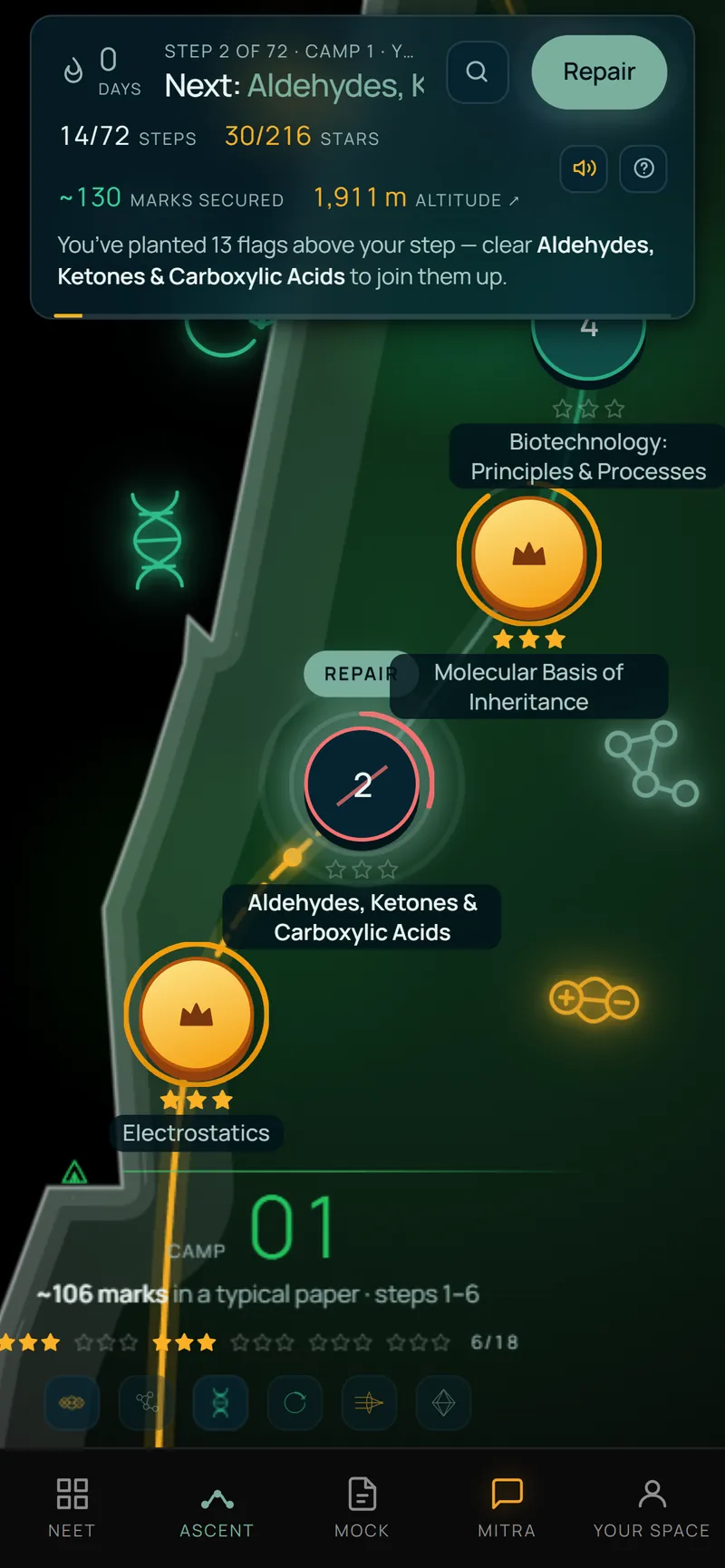
Stars are mastery, so they fade
A node’s stars come from the chapter’s real score, which decays over time. The path asks to be revisited; it never lies about what you have kept.
Ten questions a step, recorded like a test
Each step is a mix — multiple choice, typed answers, assertion–reason, past paper — and every answer feeds mastery, the Vault and the tutor exactly as a topic test does.
Two routes
Walk it in the order school teaches it, or where the marks are. Pick once; park the chapters you are not ready for.
Exam mode
The room goes quiet.
On a full paper the sidebar disappears, the clock takes over and nothing else asks for attention.
Fullscreen, one button
Offered on every sitting; the browser grants it from a click and nothing else.
A summary before you submit
Answered, not answered, marked and not visited, per subject, before the paper is final.
Warnings at 30, 10 and 5 minutes
Each fires once. A paper resumed past a point skips it.
An autopsy after
Where the marks went, subject by subject, with the questions that cost the most.
Coverage
Seventy-two chapters. All of them, on day one.
- 72
- chapters, the whole NEET UG syllabus
- 19
- Physics chapters
- 21
- Chemistry chapters
- 32
- Biology chapters, half the paper
- 90k+
- questions behind them, open from day one
Every chapter is tagged Class 11 or Class 12, and none of them is behind a bundle you have to buy separately.
Twenty of the live chapters produce about 44% of the paper. ExamGraph knows which, and puts the marks first.
Papers and formats
Every kind of paper the exam has ever set.
Fixed mocks, custom papers, past papers and every special format, all recorded the same way.
15 full mock papers
180 questions, 180 minutes, 45 / 45 / 90, +4 / −1, in the palette.
Custom papers
Pick five or more chapters, 15 to 180 questions, 5 to 300 minutes. Build it, sit it the same evening.
18 past papers, exact
AIPMT 2009 to NEET 2026, each diffed question by question against the official paper.
Assertion–Reason and Match
A verified pool for the two formats that decide close ranks.
Statement, Sequence, Numerical
The other formats the paper has been adding, served as their own sets.
The daily ten
A mixed set every morning, recorded like a test, with a streak that means something.
Standing
Where you stand, and who you sit with.
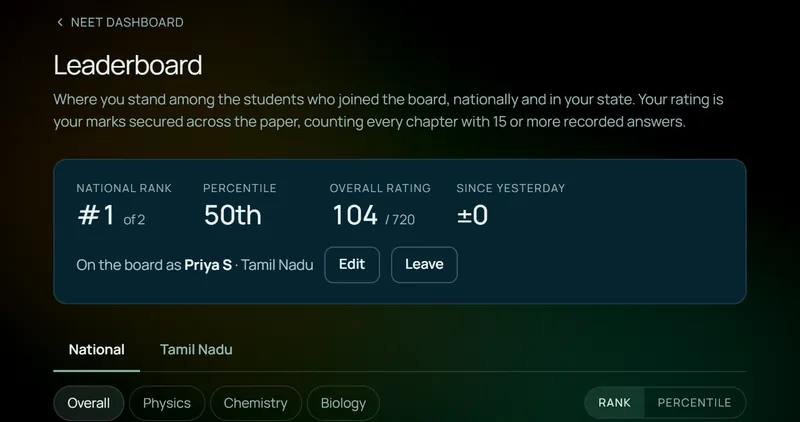
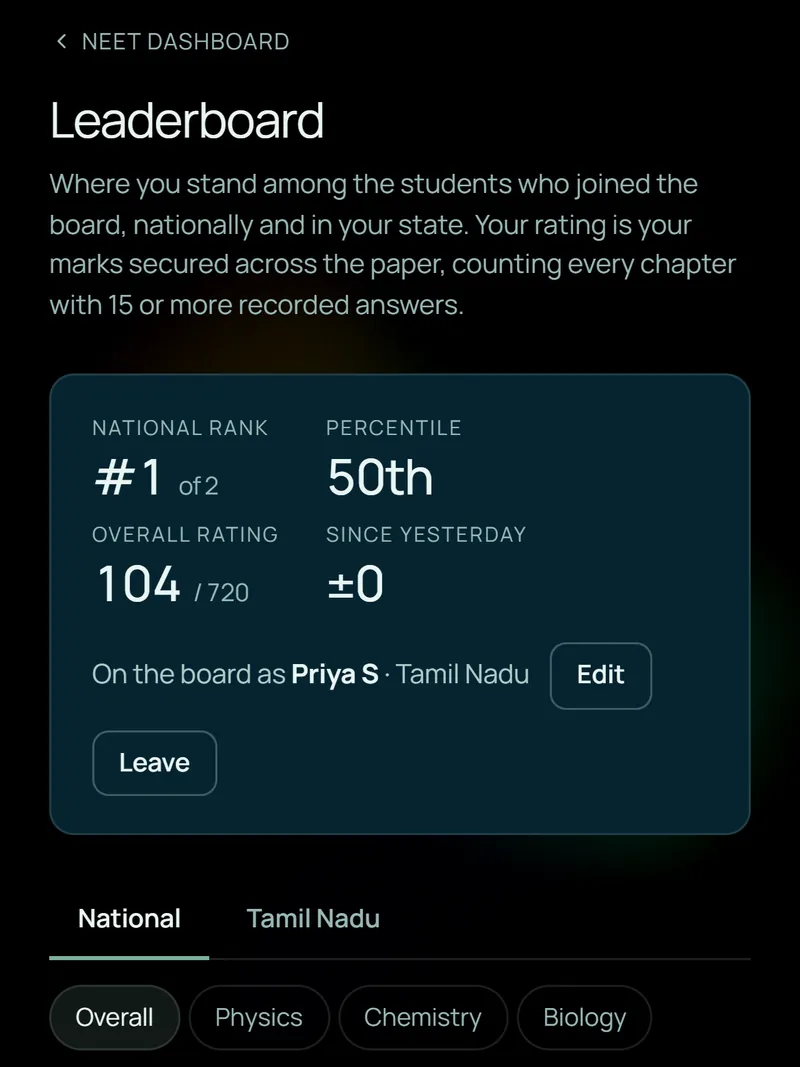
An opt-in leaderboard
National and by state, one rating out of 720 built from real mastery, rank history and a distribution curve. Nobody is listed or counted until they join, and a student who has not joined still sees where they would stand.
Circles
Up to thirty friends who post papers at each other and see one board per paper. Join by link. No chat, by decision.
Yours
A dashboard you arrange yourself.
Widgets you add and move, five themes with animated backgrounds, and a personalise sheet for your stage, your shaky chapters, your daily minutes and your target marks.
ExamGraph runs in a phone browser today. App Store and Google Play builds are in progress.Free and the pass
Free forever, and one payment for the rest.
Free
- Mock paper 1 in full
- The daily ten, every morning
- Two topic tests
- One custom paper of up to 30 questions
- Five step-by-step explanations
No card. Nothing expires. Attempt history and chapter scores belong to the account, not to a plan.
The NEET 2027 pass
- One payment: ₹999, or ₹750 for accounts created before 1 November 2026.
- Access to 31 May 2027. Nothing renews, nothing to cancel.
- Every mock, every custom paper length, every chapter, every format, and MITRA.
Until 1 November 2026, every free account can claim a Pro trial.
Built by Philotium
What it took.
- A question pipeline that OCR’d 20k+ questions from 19 books and reviewed every figure
- Serve gates so a broken question never reaches a student
- Row-level security, payments with Razorpay, and webhooks shared safely across two products
- A retrieval layer over 4,185 NCERT passages with exact citations
- Five WebGL themes that pause when they are not on screen